// 🏈Morning, & Go Hoosiers. What a game.
Quick note: If growth feels stuck right now, you’re not alone. Over the next few weeks, I’m breaking down the three reasons I see most often, starting today with the one most founders miss.
… And for any new readers, welcome to Signal // Noise — the newsletter read by CEOs, founders, & scrappy builders every Thursday. Each week, what I’m listening to, one deep dive, notes from the field, three links worth your time. No buzz, no bullshit.
While I Was Writing Today’s Signal // Noise:
How about a little South African trumpet to start your day…
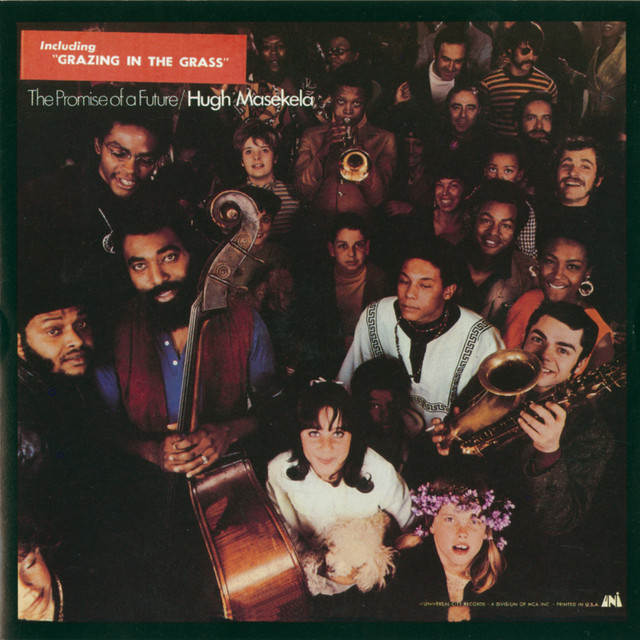
🎧 Want the whole vibe? The running playlist is right here.
From sound to signal, let’s get this baby rolling with what’s on my mind…

The Signal
One big idea, insight, or take - grounded in the real work, not theory.
Your ICP Changed - And Here’s the Proof
Revenue doesn’t usually just fall off a cliff.
Most of the time, it just stops growing — flat MRR, longer sales cycles, weaker conversion rates, more churn than expansion. It feels like a marketing or sales execution problem, but sometimes, it’s a buyer alignment problem.
“WTF is buyer alignment?”
Well, I’m glad you asked.
Because today’s thesis is that growth can stall when your idea of the ideal customer lags behind who’s actually buying right now.
Not hypothetically, not anecdotally — but measurably.
This isn’t the old “ICP definition is important”, conversation.
Yes, it’s important to name, understand, and clarify your ICP (of course).
But, what I’m talking about is something that’s been called out recently by one of the most respected growth firms in tech:
In the a16z pod episode, “Do You Really Know Your ICP?”, they talk about how most growth-stage founders think they know their ICP, but rarely update it as the business evolves. They call misalignment a hidden cause of pipeline gaps, inflated acquisition costs, stalled product roadmaps, and slower growth — not a peripheral issue, but one of the central scaling levers.
Put another way: if your ICP was defined in 2022 or 2023, there’s a good chance your buyer in 2026 looks very different today.
Let’s look at two case studies of how ICPs shift in the wild:
There are two different ways ICPs change, and confusing them is where you can sometimes get tripped up.
Market-driven: sometimes, the market changes the buyer underneath you. You didn’t choose it. You just wake up one day and realize urgency, budget, or willingness to pay moved.
Company-driven: other times, the company chooses to change its ICP because growth hits a ceiling and staying put no longer works.
Both show up as “stalled growth”, but the fix depends on which one you’re dealing with.
Here’s an example of when the ICP shifts underneath the company.
Mailchimp didn’t wake up one day and decide to abandon small businesses. The small business buyer changed.
For years, Mailchimp’s ICP was clear. Solo operators. SMBs. Scrappy marketers sending newsletters and promos. Email was high leverage, relatively uncluttered, and cheap. That buyer had urgency and tolerance for tools.
Over time, that changed: email became commoditized. Inboxes got noisier. The ROI from “just email” flattened. Small businesses became more price sensitive, not less.
At the same time, a different buyer emerged with more urgency and more budget. Ecommerce and digitally native businesses that needed lifecycle marketing, attribution, and deeper integrations.
Mailchimp didn’t cause that shift, they responded to it.
You can see it in what they built. They expanded from email into marketing automation, they leaned into ecommerce integrations and customer data, and they repositioned the product for businesses with more complex revenue operations.
That’s an ICP shifting underneath a company. Ignore it and growth stalls. Follow it and growth resumes.
Now the opposite case, when the company pro-actively makes the change.
Slack’s early growth came from bottom up adoption. Individual teams loved it, and that drove organic spread from user to team to company, which is why early Slack obsessed over frictionless onboarding and ease of use.
But that motion had a ceiling; to keep growing, Slack made a deliberate decision to go after Enterprise IT. Procurement, and security teams would become the buyer.
That choice forced real change inside the company; security and compliance became first class. Admin controls and governance mattered. Integrations and standardization took priority over pure delight.
Slack didn’t discover a new ICP by accident, they chose one to unlock the next phase of growth.
This distinction matters, because sometimes your ICP changes without you noticing. Other times your ICP stays the same and you need to move.
This isn’t just history. It’s evidence that accelerating a stalled growth pattern often requires changing who the product is truly built and sold for, whether the market forces your hand or you make the call yourself.
The AI Boom is shifting buyer behavior (right now)
According to Salesforce’s latest SMB trends report, three-quarters of SMBs are already investing in AI, which is an absolute crazy number. SMBs are integrating AI into everyday work, marketing, and customer interaction, and that suggests buyers in small and medium segments are behaving very differently from how they did even two years ago.
If you’re still optimizing your growth strategy around last cycle’s buyer, you’re optimizing the wrong thing.
Here’s a simple test: ask yourself, where is demand actually the strongest?
You don’t need a massive survey or months of analysis to see this:
If small, nimble teams or deep practitioners are buying quicker and more urgently than the buyers your sales deck targets → your ICP may have shifted.
If higher-title decision-makers are dragging their feet, prolonging cycles, or not responding at all → you could be fighting yesterday’s buyer profile.
If usage and retention look stronger in non-traditional segments (e.g., power users, niche communities, creators) → that’s not noise — that’s the signal, baby.
Sit down today and jot down the answers to the following four questions:
Who closes fastest right now?
Who uses the product without hand-holding?
Who gets annoyed when it’s down?
Who would be pissed if you turned it off tomorrow?
If the answers to those questions don’t match the slide that you’re selling, no amount of growth hacking or voodoo PLG can fix the problem.
A modern proof point: the creator economy
A concrete example of an evolving buyer profile is the creator economy, a segment that has shifted from being attention-centric to revenue-centric.
Today the creator economy is a real business ecosystem, not just influencers chasing pageviews and likes. It’s valued at $190 billion and projected to grow toward half a trillion by 2030, with nearly half of creators working full-time.
That matters for today’s founders because who actually buys things in this economy has changed.
Then: Creators mainly earned attention on platforms like YouTube or Instagram, but didn’t directly control the monetization. Platforms and brands made decisions & held budget authority.
Now: Creators increasingly earn money directly from customers and buy tools themselves to sustain or grow that revenue stream. Platforms like Patreon have paid out over $10 billion directly to creators, meanwhile, Substack’s growth — including raising a $100 million round and surpassing millions of paid subscriptions — shows that independent creators are not just attention generators; they’re paying customers willing to invest in tools that help them own and scale their business.
For a founder selling into this world, the difference is real:
Early creator tools sold into an attention economy — the metric was eyeballs, not dollars. And the end-user were platforms and big brands.
Today’s creator buyers evaluate solutions mostly by whether the tool helps them earn more directly — recurring revenue, subscriptions, membership monetization, or community growth — and they have budget authority to pay for that themselves.
This is exactly what the a16z podcast warns about: ICP needs refinement as markets mature, because buyer influence, authority, and budget change faster than most GTM decks will update.
The blunt conclusion
Flat growth isn’t bad messaging or a funnel issue, it’s often a mismatch problem.
Not because your product is all of a sudden bad, but because your assumed buyer, the one you built around, no longer holds the urgency, budget, or context that drove early success.
Remember, growth doesn’t follow quantity-of-effort or finding the next channel unlock; sometimes it follows alignment between problem + buyer + urgency. When that triangle moves or shifts, so must your target.
A few Jawns to Check Out
Smart reads, sharp tools, or internet gems.
A great reminder that taste, restraint, and knowing what not to do matter more than grinding out more work. Rubin on creating space — not forcing outcomes — is useful whether you’re building art, a company, or both. Dude is the f*king man. Check it out here.
My good bud and HubSpot legend — Kieran Flanagan — lays out how AI can mimic buyer intent signals before a human ever raises their hand. This might be equal parts fascinating and mildly terrifying, too, but it def changes things. He gives you a play by play to follow. Check it out here.
This First Round piece isn’t another generic product-market-fit article, it zeroes in on the importance of language. How do you talk so customers feel like you’ve read their minds? It’s a subtle but powerful lever for onboarding, retention, and acquisition. Worth a read. Check it out here.

Next week: Part 2 of When Growth Feels Stuck… when your ICP is aligned, but the growth playbook that got you here quietly stops working.
Hope everyone has a great weekend.
And until next time, thanks for reading.
Jordan
P.S. Wanna work on something? Got a pod or content idea? → Email me | Need 30–60 min of advice? → Book here | Want a coach in your corner? → More info