// Last week, WHOOP hit a $10 billion valuation. I used to be a proud product user — but left. And looking back, the reason I left is exactly why they won.
… And for any new readers, welcome to Signal // Noise — the newsletter read by CEOs, founders, & scrappy builders every Thursday. Each week, what I’m listening to, one deep dive, notes from the field, three links worth your time. No buzz, no bullshit.

| MIXTAPE |
🎧
|
Sad disco by flipturn — the Florida indie band — dropped in 2022, and it’s the kind of track you throw on when you’re just a little nostalgic, a little tired...
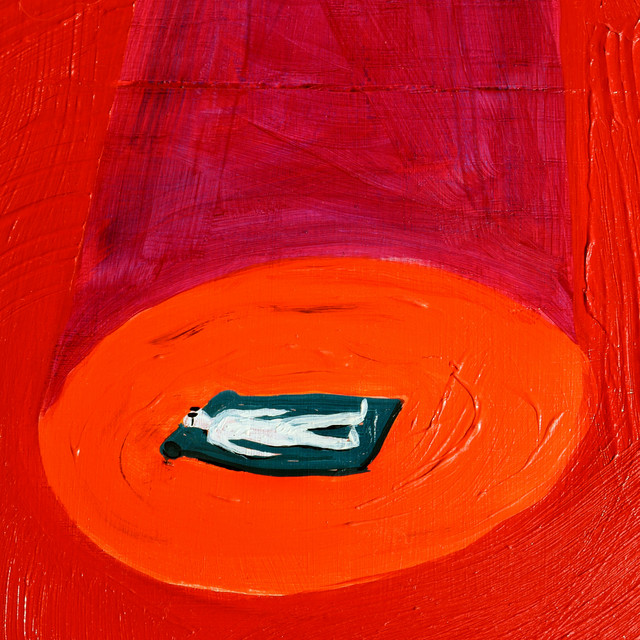
🎧 Want the whole vibe? Find & bookmark the running playlist right here.
From sound to signal—let’s get this baby rolling with what’s on my mind this week…
| THE SIGNAL |
📡
|
What I Got Wrong About Whoop
Cristiano Ronaldo, LeBron, Rory McIlroy, Mayo Clinic, sovereign wealth funds.
You’ve probably already read the news, which is impressive AF.
By all accounts, it was a monster round — doubled bookings, 2.5M members, and already cash flow positive.
But I want to tell you a different WHOOP story — mine.
I was an early-ish adopter, wore a WHOOP religiously for two years, repped it hard, and legit loved the product.
But over time, I kept reaching for my phone to check the time, getting sucked into notifications, and wishing I could just... glance at my wrist. You know, like a watch.
So I started asking around. I had a friend inside WHOOP at the time, and hit them up: "Where on the roadmap is a watch face? A WHOOP with a screen? It's gotta be coming soon, right? No way I'm the only one asking."
Their answer? Of course people were asking. It was probably one of the single most-requested features, by far.
And yet... it was nowhere on the roadmap. Not coming, not anytime soon.
I was frustrated, and reluctantly switched to an Apple Watch. That was three-plus years ago.
And now, looking back, I realize that decision was genius.
Not my decision — Will Ahmed's decision. The decision to say no.
Will has talked about this publicly, about how staying narrow and resisting the pressure to become a smartwatch was one of the most important strategic calls they made.
Not because a watch face is inherently a bad idea, but because chasing it would've pulled the entire company off its core mission: being the best continuous health monitoring platform on the planet.
Think about what that "no" required. Your most passionate users are literally telling you what they want. The feature request is obvious, loud, and constant.
And you look at it and say, "Nope. Not us. Not now."
That takes an absurd amount of discipline.
I wrote about this exact dynamic back in October, about how saying no was one of the hardest and most important things I did as a startup CEO.
Every week when I was running Hampton — a founders community I led as CEO — someone had a new idea for where to take the business. Go downmarket. Go upstream. Spin up a conference. Build a data product. And every week, the temptation got louder because the traction was real. (I'll be honest, I still said yes to too many things. But I tried to hold the line as best I could.)
But here's what I think most founders get wrong about focus: they think it means picking the right things to work on. It doesn't; instead, focus means killing the things that feel right but aren't.
The ideas that are good but not yours. The features that would make some customers happy but pull you away from making your best customers obsessed.
It's something I work on constantly with my coaching clients now. One tactic I love: the "someday/maybe" parking lot.
When I was coaching Codie Sanchez, we used this all the time. She'd come in hot with a new idea, and instead of killing it outright, we'd park it. The deal was simple: if she was still as fired up about it in six months, it was worth revisiting. If she wasn't, we could both be glad we didn't burn cycles on it.
Insight: most things in the parking lot stay in the parking lot.
The discipline of not doing things
WHOOP is the extreme version of this lesson. They had swaths of users begging for a feature, and they still said no, because it didn't serve the thing they were actually building.
The result is a company that didn't try to out-Apple Apple. A company that stayed focused, stayed narrow, and just got valued at ten billion dollars.
So remember: saying no isn't conservative, it's often the most aggressive thing you can do.
| A FEW JAWNS TO CHECK OUT |
🔗
|
🎧 Sweet Pod // Morgan Housel Talks Growth, Identity, and Cultural Tension with WHOOP's Will Ahmed
My friend Morgan Housel interviews Will Ahmed and there's a line in here that stuck with me: if your company is getting better fast, you need to be getting even better, faster. No coasting. Also loved the thread they pull on the tension between OG employees and newer hires. You’ll understand that one one if you've ever scaled a team.
📚 Book Rec // The Panic of 1907: The Crash That Almost Broke Everything
If you're a history nerd and a markets dork (sup), this one's for you. It covers the lesser-known (but just as gnarly) crash of 1907, the one that basically forced the creation of the Federal Reserve. Wild story, well told.
🧠 Smart Hack // Supercharge Your Research with a 10-Second Claude Skill
Takes literally 10 seconds to install this as a Claude skill. If you wrote an ICP five years ago and haven't touched it since, this will drag it into the present. Automatically sharpens whatever market or product research you're running.

Was this helpful? Relevant? Totally off-base?
—> Tell me. I read every single reply.
—> Or pass it to someone who’d get value from it.
Go say no to something this weekend. You'll thank yourself in six months.
Until next time, thanks for reading.
Jordan
P.S. Wanna work on something? Got a pod or content idea? → Email me | Need 30–60 min of advice? → Book here | Want a coach in your corner? → More info