// Buongiorno from Tuscany, where I’m three glasses of wine and a bowl of bucatini deep. 🍝
… And for any new readers, welcome to Signal // Noise — the newsletter read by CEOs, founders, & scrappy builders every Thursday. Each week, what I’m listening to, one deep dive, notes from the field, three links worth your time. No buzz, no bullshit.

| MIXTAPE |
🎧
|
Lee Moses is the Atlanta deep soul guy who should have been as famous as Otis Redding, just wasn’t. Somehow he found a following decades later, all grit and soul and screams.
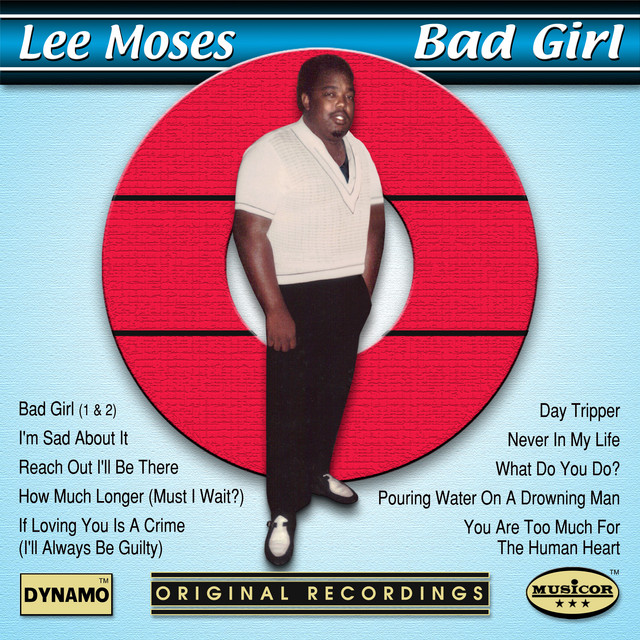
🎧 Want the whole vibe? The 2026 playlist is right here.
| THE SIGNAL |
📡
|
Stop Being Your Team’s Notification System
A founder I work with runs a $6M SaaS business with 10-15 people.
Great product, solid customers, the company's doing well.
But every day is starting to feel the same: something breaks, someone Slacks him about it at 10 AM, he makes a call, the team scrambles, and by 5 PM the immediate fire is out.
The next morning, a different fire, still buried in slack.
On the other end of the spectrum: I have a VP client at a $100M+ revenue company dealing with the exact same problem.
Overwhelmed by people stuff and inbound requests.
It’s different scale, but same issue.
This pattern can hold no matter where you are on the revenue chart.
There will always be fires to put out, Slack pings waiting, deals to close, people to hire and onboard and let go.
A lot of us — myself included, at times — try to work ourselves out of it.
The easy answer is to keep firefighting. Forward momentum and learned habits.
The hard answer, IMO, is to stop, and build a system.
That's why they call them hard things. Because they’re… hard.
So what's actually happening in both of these cases?
Their teams bring them decisions because they don't know which decisions are theirs to make.
There is an inherent lack of operating clarity.
Is a $5K vendor contract something the founder approves, or do they just handle it themselves?
Does the product roadmap go through the CEO every week, or just quarterly?
If a customer escalates, does the support lead own it or flag it first?
Does a backfill require VP sign-off or is that just part of daily operating?
When nobody writes any of this down, the team errs on the side of caution and loops you in.
You become the notification system. And because there's no rhythm to it, no structure, every question feels urgent.
Reactivity isn't necessarily a personality flaw you just have to accept, it can be a systems problem that you solve and fix.
Your job as CEO or a leader isn't to do more, it's to do less, but to define what less means.
Most founders hear "delegate more" and read it as "trust your team," then feel burned when the team keeps bringing them decisions or when they f*ck up something really important.
That ain’t it. You just have to tell them what you're actually responsible for.
This is where DACIs come in.
DACI is a decision-making framework: Driver (who owns it), Approver (who makes the final call), Consulted (whose input matters), Informed (who needs to know it happened).
Your job is to write down your DACIs, hand them to your team, and say, "Here's what lands on my desk. Everything else is yours to own."
Here's a starter version of what that list could look like:

DACI table — decision categories mapped to your role. A = Approver, C = Consulted, I = Informed, D = Driver (rare)
You build the real one live, in a doc, with your team.
Maybe you only have five categories, maybe you have seven.
What matters is that your team stops asking you about everything, because the rules are explicit.
The budget request under $20K? They don’t need you.
The feature prioritization? That's the product leader's.
The customer refund? Support owns it and tells you after.
And because there's a predictable structure, you can finally see patterns instead of drowning in noise.
Creating An Operational System
Companies that operationalize strategy through a defined cadence with clear role ownership, from quarterly planning down to weekly tracking, build accountability without bureaucracy.
David Sacks calls a version of this an operating cadence, a simple system of meetings and metrics that connects strategy to weekly action.
Set the perimeter, and the team moves faster because they're not waiting on you. You move faster because you're not buried in approvals.
Once you've defined your actual five-to-seven categories, the hard part starts: you have to stick to it. Your product leader brings you a shipping decision you care about. You want to weigh in. You can't. You have to trust they're competent, and you've set them up to win.
That's what delegation actually means.
The result: fewer Slack messages, more time for thinking about what's next, a team that moves with purpose instead of paralysis.
Install the system, and the fires get smaller and fewer.
| A FEW JAWNS TO CHECK OUT |
🔗
|
🔍 Big News // Google Built the AI Performance Report Everyone Wanted
Google just shipped a new GSC report that shows how often your pages show up inside AI Overviews and AI Mode. The catch: it's impressions only, no click data yet, and it's rolling out to a subset of sites first, so you might not see it live in your account. If you care about staying visible as search keeps shifting, the early breakdown is worth a read.
🗣️ Great Post // Finding The People Who'll Actually Tell You the Truth
Brent Beshore wrote about why the people around you stop being honest, and why it gets worse the more power you have over them. A little too much proverb and God talk in here, which ain't really my thing, but the core idea is too good to skip: the ones who level with you tend to be the most rare. I've got a mentor like that now, and had an advisor like it back when I was CEO, and I can verify how incredibly valuable it is.
📖 Book Rec // Small Boat
Vincent Delecroix's slim novel had a moment not too long ago, as it shortlisted for the International Booker Prize and picked for Dua Lipa's book club. It's narrated by a woman who takes a distress call when a migrant boat capsizes in the Channel, and the book refuses to let anyone, her included, off the hook for what happened. I really liked it. It’s short, narrative, contemplative, and definitely sat with me for more than a few nights.

You may not need more hours. More likely, you need a shorter list.
Figure out the 5-7 things you NEED to be involved in, and watch the noise begin to drop.
Have a great weekend.
And until next time, thanks for reading.
Jordan
P.S. Wanna work on something? Got a pod or content idea? → Email me | Need 30–60 min of advice? → Book here | Want a coach in your corner? → More info